Introduction
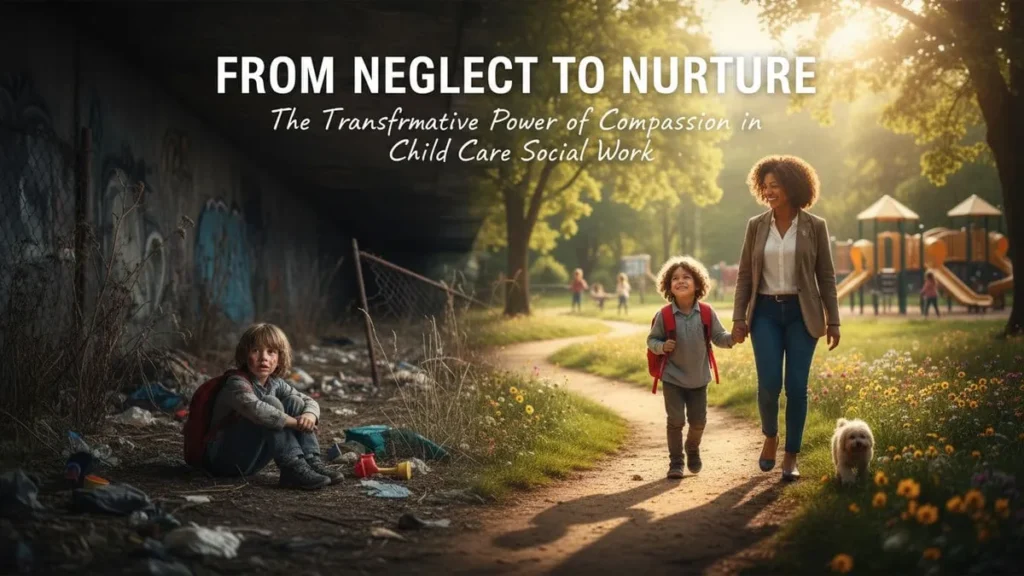
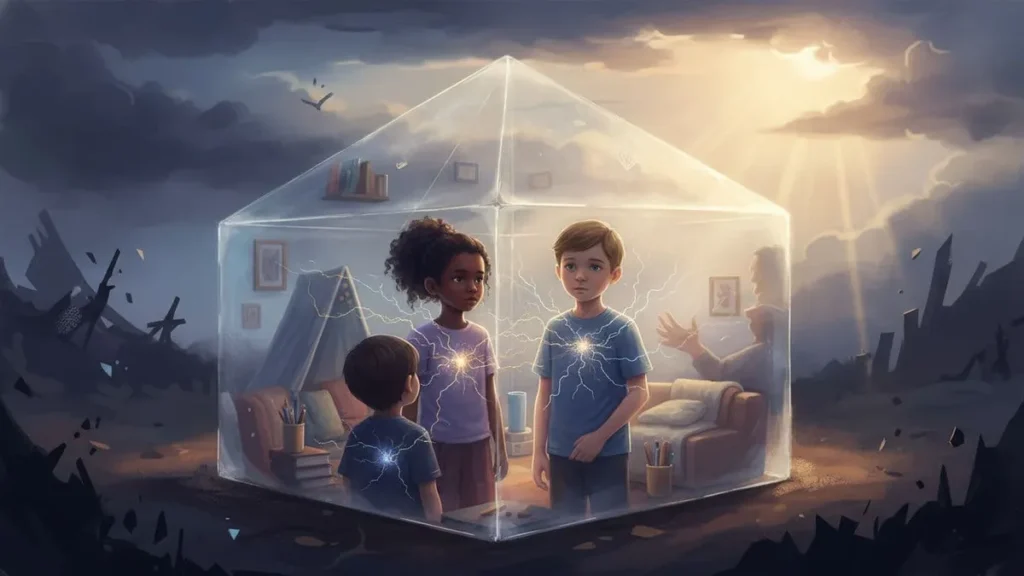
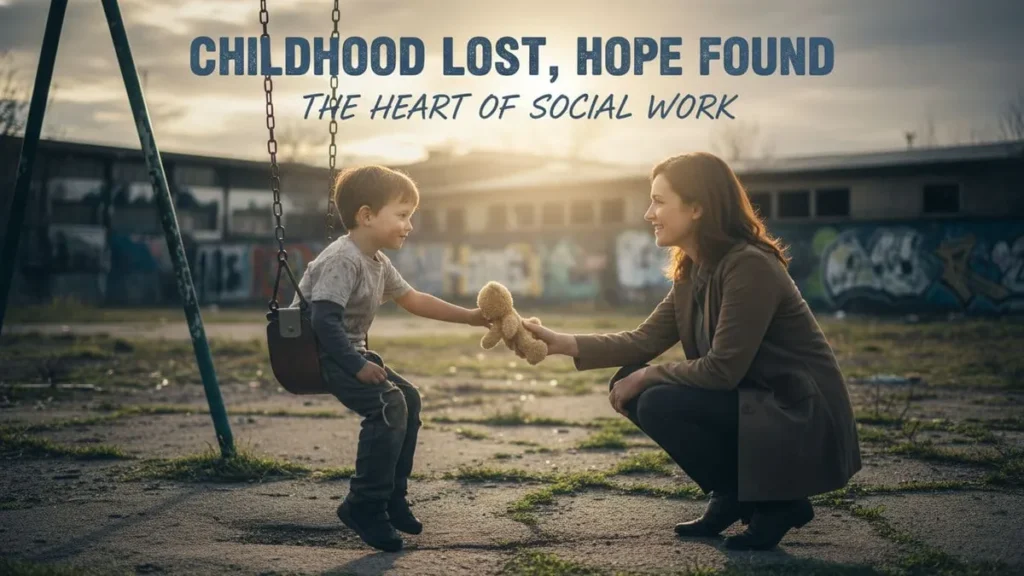
Behind every rescued child, every rehabilitated youth, and every family reunited through care lies the invisible heartbeat of humanity—social work. The title “Childhood Lost, Hope Found” perfectly captures what social workers strive for every day: to restore light where darkness once lived. Across the world, millions of children are stripped of safety, education, and innocence due to poverty, neglect, abuse, or displacement. But where despair begins, social work intervenes—with compassion, resilience, and hope. This article explores how social workers heal broken childhoods, why their mission is more crucial than ever in 2025, and what lessons their compassion offers to society at large.
Table of Contents
- What is Social Work in Child Welfare?
- The Meaning of “Childhood Lost, Hope Found”
- Why Social Work Matters in 2025
- The Psychological Power of Hope in Child Recovery
- Global Data and Statistics
- The Role of Social Workers in Rebuilding Lives
- Barriers and Challenges Faced by Social Workers
- Lessons from Global Case Studies
- The Future of Social Work: Innovation and Compassion Combined
- Conclusion: When Hope Becomes a Profession
What is Social Work in Child Welfare?
Social work in child welfare refers to the structured, evidence-based efforts to ensure children’s safety, development, and well-being. Social workers address physical, emotional, and psychological needs of children, especially those at risk of neglect, abuse, or exploitation. They work across systems—schools, courts, hospitals, shelters, and communities—to ensure every child has access to protection, care, and opportunity. This includes advocacy, counseling, crisis intervention, and rehabilitation.
Common FAQs (People Also Ask)
Q1: What does a child social worker do?
They assess, protect, and support vulnerable children while strengthening families through education, therapy, and resources.
Q2: Why is social work important for children?
Because it restores rights, prevents exploitation, and builds the foundation for a secure and happy life.
Q3: How do social workers help traumatized children?
Through trauma-informed care, therapeutic interventions, and consistent emotional support.
Q4: What are the challenges in child social work?
High caseloads, emotional exhaustion, systemic constraints, and limited resources.
Q5: Is social work a rewarding career?
Yes. Though emotionally demanding, it offers profound satisfaction by creating real impact in people’s lives.
The Meaning of “Childhood Lost, Hope Found”
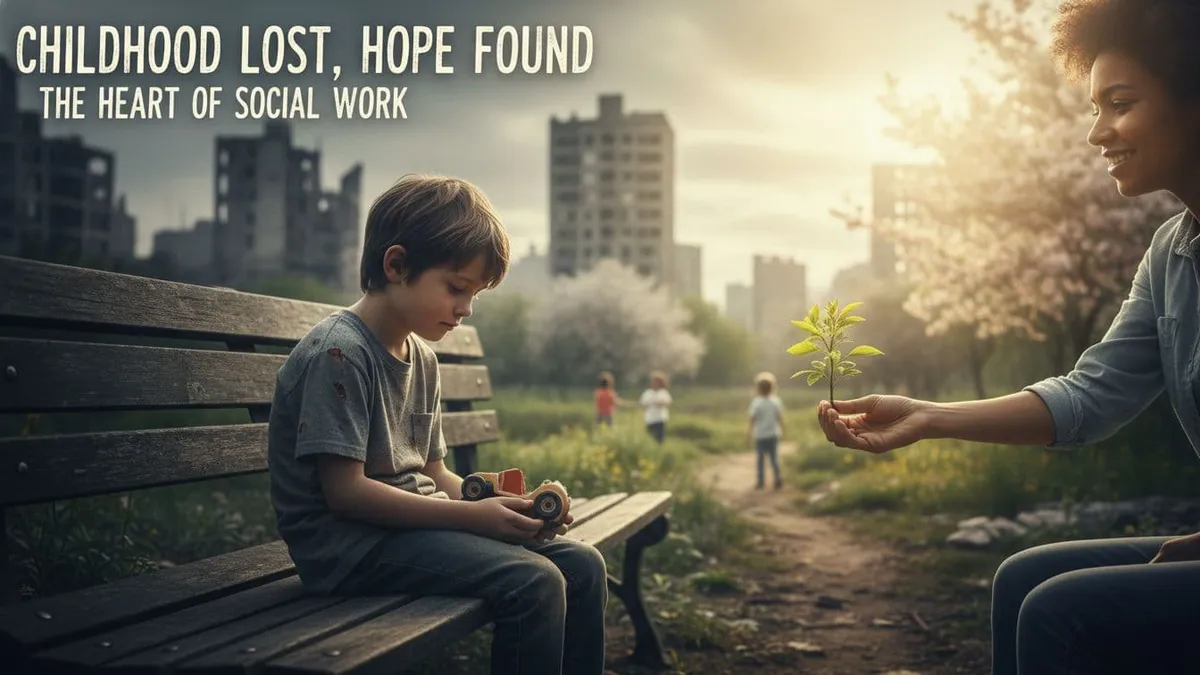
The phrase symbolizes transformation. “Childhood lost” reflects the tragedies children face when exposed to abuse, neglect, or war. But “hope found” represents recovery—the process of healing and rediscovery guided by social workers who refuse to give up. For every child who has lost a part of their childhood, a social worker becomes a lifeline. They don’t just fix problems—they rebuild futures. Their work transforms trauma into resilience and pain into purpose.
Why Social Work Matters in 2025
In 2025, global child welfare stands at a crossroads. The rise of AI, economic disparity, and mental health crises demand both technological innovation and emotional intelligence. According to UNICEF (2024), over 385 million children live in extreme poverty, and 1 in 4 experience violence or exploitation. In this context, social workers are not only caretakers but also agents of systemic change. They advocate for policy reforms, create community awareness, and ensure that vulnerable children aren’t left behind in the digital divide. With new training in data-driven protection systems and trauma-informed care, modern social workers are combining science with compassion to deliver hope in an increasingly complex world.
The Psychological Power of Hope in Child Recovery
Hope is not just an emotion—it’s a neurological process that rewires the brain for resilience. Studies by the Harvard Center on the Developing Child reveal that when children experience consistent empathy and care, their stress response systems stabilize, improving emotional regulation and learning. Social workers play a critical role in this process by serving as consistent, safe figures in the lives of children who have lost trust in adults. Through storytelling, therapy, and positive reinforcement, they help children believe that better days are possible. Hope becomes a tool for healing, a bridge between past pain and future potential.
Global Data and Statistics
- UNICEF (2024): Over 5.2 million children receive direct intervention services annually through social work programs.
- World Health Organization (WHO): Children in trauma-informed care programs show a 45% improvement in emotional stability and social skills.
- World Bank (2023): Every dollar invested in early child welfare yields a $9 return in long-term social productivity.
- Save the Children (2024): Regions with community-based social work programs report a 60% drop in school dropouts and child labor cases.
- International Federation of Social Workers (IFSW): Globally, over 3.8 million social workers serve in child protection roles, but demand is expected to increase by 20% by 2030.
These statistics affirm that social work is not charity—it’s essential infrastructure for a healthy, equitable society.
The Role of Social Workers in Rebuilding Lives
Social workers are healers, advocates, and educators. Their role extends beyond intervention—they become mentors and allies for children navigating trauma. By collaborating with teachers, psychologists, and law enforcement, they create a safety net for holistic recovery. They help children access education, healthcare, and emotional stability. In crisis zones, social workers provide psychological first aid; in foster systems, they monitor placements to ensure nurturing environments. Their presence brings structure to chaos and empathy to bureaucracy.
Barriers and Challenges Faced by Social Workers
Despite their invaluable contributions, social workers face immense challenges. Heavy caseloads, bureaucratic red tape, and underfunded programs often limit their effectiveness. Emotional exhaustion is common due to constant exposure to trauma. Yet, they persevere—driven by purpose, not profit. Governments and NGOs must invest in their well-being through fair wages, mental health resources, and continuous training. Empowered social workers mean empowered children.
Lessons from Global Case Studies
1. India – Project Smile: Social workers in rural areas partnered with local schools to rehabilitate children rescued from bonded labor. Within two years, school attendance rates rose by 75%.
2. Norway – Family Reunification Program: Trauma-informed family counseling reduced child re-entries into foster care by 40%.
3. Kenya – Childline 116 Initiative: A 24/7 helpline staffed by trained social workers rescued over 90,000 children from abuse and exploitation in 2024 alone.
4. Brazil – Community Empowerment Model: Empowering mothers through parenting programs led to a 30% reduction in domestic violence incidents affecting children.
5. USA – Trauma Recovery Centers: Integrating social work with therapy and education improved long-term outcomes for children exposed to violence by 50%.
These programs demonstrate how empathy, when combined with professional strategy, can transform child welfare globally.
The Future of Social Work: Innovation and Compassion Combined
The next frontier of social work lies in merging innovation with empathy. AI and data analytics can help predict risks and allocate resources more efficiently, while virtual counseling can extend reach to remote communities. However, technology can never replace the human touch. The warmth of a caring conversation, the power of listening, and the assurance of presence—these remain irreplaceable. Social work education in 2025 and beyond must therefore balance digital literacy with emotional intelligence. The future belongs to compassionate innovators—those who use technology to serve, not to distance.
Conclusion: When Hope Becomes a Profession
Social work is more than a career—it is a calling rooted in love, justice, and humanity. When a child’s laughter returns after months of silence, when a once-abandoned youth graduates from school, when families rediscover unity—these are the victories that define social work. The profession teaches us that even when childhood is lost, hope can be found and rebuilt. At Angel Alliance Initiatives, we celebrate these everyday heroes whose courage rekindles hope in forgotten hearts. They remind us that true power lies not in authority, but in empathy—and that behind every recovered childhood stands a social worker who believed in the impossible.